60–90 Day Construction Bid Management Workflow for Trade Teams
60–90 Day Construction Bid Management Workflow for Trade Teams ! Construction bid workflow title card illustration The best construction bid management workflow runs on seven fixed stages, a formal bid/no-bid scorecard, and automated intake alerts, not on memory and shared spreadsheets.
The best construction bid management workflow runs on seven fixed stages, a formal bid/no-bid scorecard, and automated intake alerts, not on memory and shared spreadsheets. Teams using a structured system like ArosBid’s platform typically cut missed deadlines within weeks and recover significant hours of estimator time per bid cycle. Start today: put every incoming RFP through a triage checklist for verifying contractors before award within two days before anyone opens a takeoff file.
TL;DR:
- Teams should complete bid/no-bid triage within 24 to 48 hours of receiving an RFP to prevent reactive rushing and prioritize high-margin opportunities.
- Automating deadline alerts and intake data from emails or portals can significantly reduce missed deadlines and streamline the bid process.
- Assigning clear ownership for each bid decision before an RFP arrives helps prevent ambiguity and improves submission accuracy.
- Implementing a structured seven-stage workflow, including takeoff, vendor solicitation, and approval routing, minimizes errors common in informal or spreadsheet-based processes.
- Regularly reviewing key KPIs such as on-time submissions, win rates, and bid/no-bid accuracy monthly enhances continuous process improvement and competitiveness.
Table of Contents
- Building a Construction Bid Management Workflow Step by Step
- Who Owns Each Bid Decision?
- Which Automations Actually Move the Needle?
- How Long Does It Take to Roll Out a Governed Bid Process?
- Which Metrics Show Your Bid Process Is Improving?
- Why Systematizing Bids Matters More Than Winning Any Single One
- How ArosBid Puts This Workflow Into Practice
- Sources
- FAQ
Building a Construction Bid Management Workflow Step by Step
Most bid failures trace back to one broken handoff, not one bad estimate. A seven stage workflow closes those gaps by giving every document, decision, and deadline a named owner and a clear exit condition before it moves forward.
- RFP capture. Log every incoming solicitation into a central intake record the moment it arrives, whether it comes by email, portal, or phone call. Minimum output: project name, due date, bond requirements, and scope summary captured in one place.
- Bid/no-bid triage (24 to 48 hours). Score the opportunity against fit, capacity, and margin criteria before assigning any estimating time. This single checkpoint prevents the reactive scramble that eats up preconstruction teams during busy seasons.
- Takeoff. Once a project clears triage, the assigned estimator pulls quantities from plans and specs. Output: a quantified scope ready for pricing, tied back to the original RFP record.
- Solicit subs and vendors. Send scope packages to subcontractors and suppliers with a firm quote deadline, ideally three to five days ahead of your own submission date.
- Assemble pricing. Level incoming quotes, apply markups, and build the base estimate. This is where inconsistent formatting from vendors causes the most delay, so a standard quote template pays off here.
- Approval routing. Route the completed bid through the required sign-offs based on dollar value or risk profile, with escalation rules for anything stalled more than a few hours.
- Submission and follow-up. Log confirmation of receipt, then set a reminder for post-bid follow-up regardless of outcome.
When an addendum changes the due date or scope, the update needs to cascade automatically to every downstream task and reminder tied to that bid record, the same behavior enterprise systems like Oracle’s Primavera Unifier build into their Request for Bid process. Manually chasing down who needs to know about a deadline shift is how bids get submitted late, or on the wrong version.
Who Owns Each Bid Decision?
Ambiguity kills more bids than bad pricing does. Assign these roles before your next RFP lands, not after a deadline gets missed:
- Preconstruction manager: owns the overall pipeline and capacity decisions across all active pursuits.
- Bid manager: runs the day-to-day workflow, tracks deadlines, and owns the intake record.
- Estimator: produces takeoffs and pricing, flags scope gaps early.
- Capture or business development lead: supplies context on the client relationship and win probability.
- Approver: signs off at defined dollar thresholds before submission.
A minimum milestone schedule keeps everyone aligned: go/no-go decision within two days of receipt, kickoff soon after that decision, draft pricing complete with several days of buffer, final review several days before the deadline, and executive sign-off at least a couple of days before submission. A simple capacity board, even a shared spreadsheet showing who’s assigned to what through the week, catches overassignment before it becomes a missed deadline.
Which Automations Actually Move the Needle?
Not every step deserves automation on day one. Focus first on the repetitive, high-frequency tasks that eat estimator hours without requiring judgment calls:
- RFP capture from email and portals into a single intake queue
- Deadline alerts that cascade automatically when addenda change dates
- Auto-task creation the moment a bid clears triage
- Approval routing based on preset dollar thresholds
- Quote leveling that normalizes vendor pricing formats
- Post-bid follow-up reminders tied to award dates
Integrations matter more than feature lists. A platform that connects to Excel and Outlook fits into workflows teams already run, rather than forcing a switch. Add takeoff software and your project management or CRM tool, and the bid record stays the single source of truth from intake through award. Teams that already run a standardized estimating process tend to see automation pay off faster, since their decision points tend to be more predictable.
Automation tends to be most beneficial once a team handles a moderate or large number of active bids with recurring similar processes. Below that volume, manual tracking with a solid checklist works fine.
Pro Tip: Pilot automation on one narrow slice first, like deadline alerts or post-bid follow-ups, before wiring up your whole approval chain. A small, measurable win builds the case for expanding automation without disrupting live bids.
How Long Does It Take to Roll Out a Governed Bid Process?
Moving from spreadsheets to a governed workflow generally takes a few months for teams with steady bid volume, based on typical implementation timelines for construction teams adopting automated bid systems. Break it into four phases:
- Phase 0, baseline (1 to 2 weeks). Document your current steps, map who touches a bid at each stage, and define the fields your intake record needs to capture.
- Phase 1, standardize (2 to 4 weeks). Build your bid/no-bid scorecard, set a fixed milestone calendar, and start a content library of reusable proposal language and past project data.
- Phase 2, automate (2 to 4 weeks). Connect RFP capture to your intake queue, turn on deadline alerts, and pilot approval routing with quote leveling on a few live bids.
- Phase 3, scale (ongoing). Expand automation to more bid types, make post-bid reviews a standing meeting, and refine your KPIs based on what the first quarter of data shows you.
Pro Tip: Don’t skip Phase 0. Teams that jump straight to automation without documenting their current process end up automating a broken workflow, which just makes the same mistakes happen faster.
Which Metrics Show Your Bid Process Is Improving?
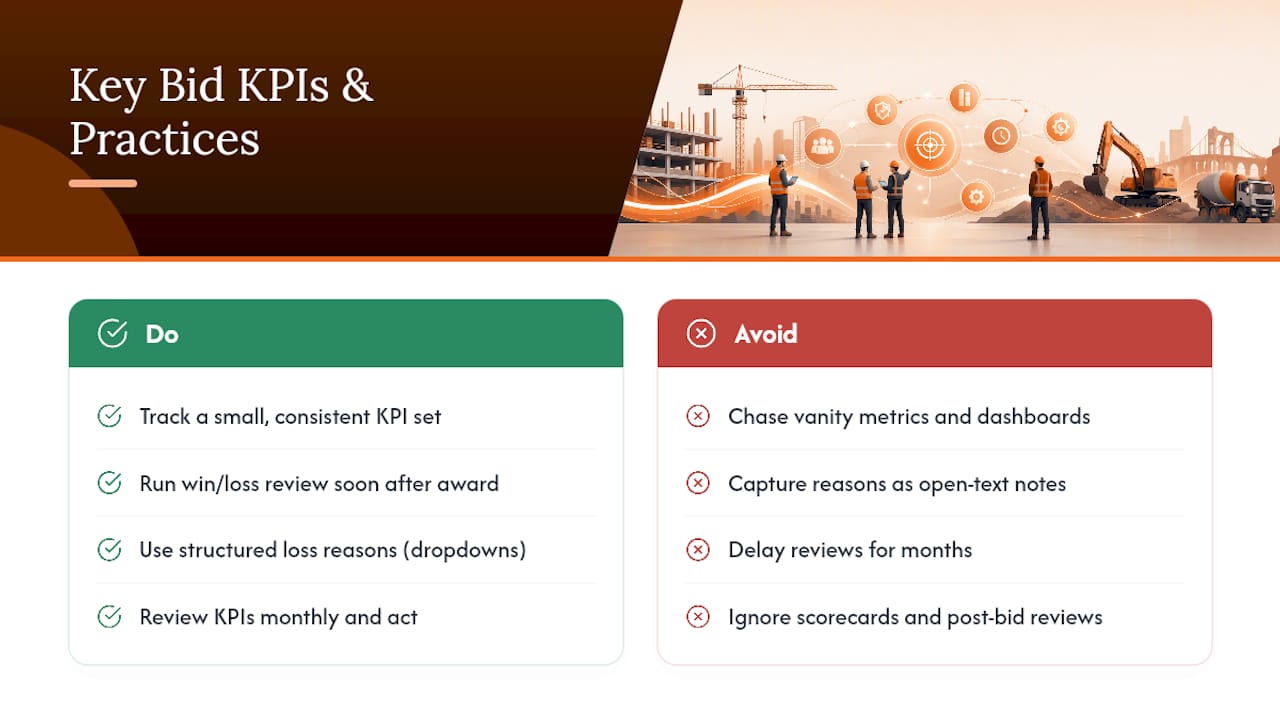
Track a small set of numbers consistently rather than a dashboard full of vanity metrics. The minimum useful set: on-time submission rate, win rate segmented by project type or client, bid/no-bid accuracy (did the projects you pursued actually fit your criteria), time-to-first-draft, and estimator hours recovered per bid cycle.
Run a win/loss review soon after the award decision, while the details are still fresh, covering both wins and losses. Structure the reasons as a short dropdown list, pricing, schedule, relationship, scope fit, rather than open text, so patterns show up across dozens of bids instead of getting buried in notes nobody rereads.
Recommended cadence: review KPIs monthly, feed recurring loss reasons back into your bid/no-bid scorecard, and add winning proposal language to your content library the same week you get the award notice.
Best practice guidance consistently points to formal scorecards and systematic post-bid reviews as the difference between teams that improve their win rate year over year and teams that keep repeating the same mistakes.
Why Systematizing Bids Matters More Than Winning Any Single One
The instinct in preconstruction is to treat every bid as its own emergency, solved by whoever has the most experience and the least sleep. That approach works until volume climbs, and then it collapses under its own weight.
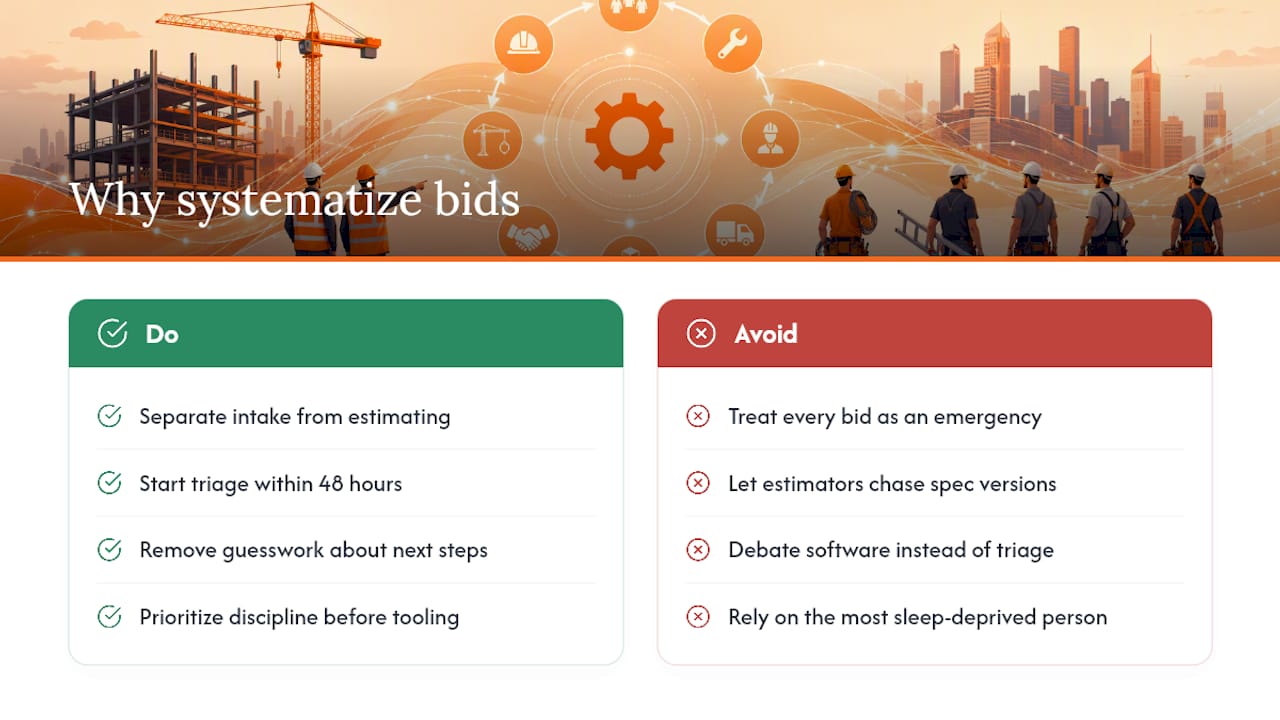
Separating intake and triage from estimating turns bidding into something closer to a production line, where estimators solve pricing problems instead of chasing down which version of the spec is current. The teams that get this right aren’t necessarily the most talented estimators. They’re the ones who removed the guesswork about what happens next.
We’d rather see a contractor start triage on their next RFP within 48 hours than spend another quarter debating which software to buy. The discipline matters before the tooling does.
— arosbid team
How ArosBid Puts This Workflow Into Practice
You’ve seen the seven stages. ArosBid builds a command center around exactly that structure, so intake, approvals, and vendor quote tracking live in one place instead of scattered across email threads and someone’s personal spreadsheet. The platform flags missed clauses and conflicting specifications before submission, the same failure points that get bids disqualified before pricing even gets reviewed.
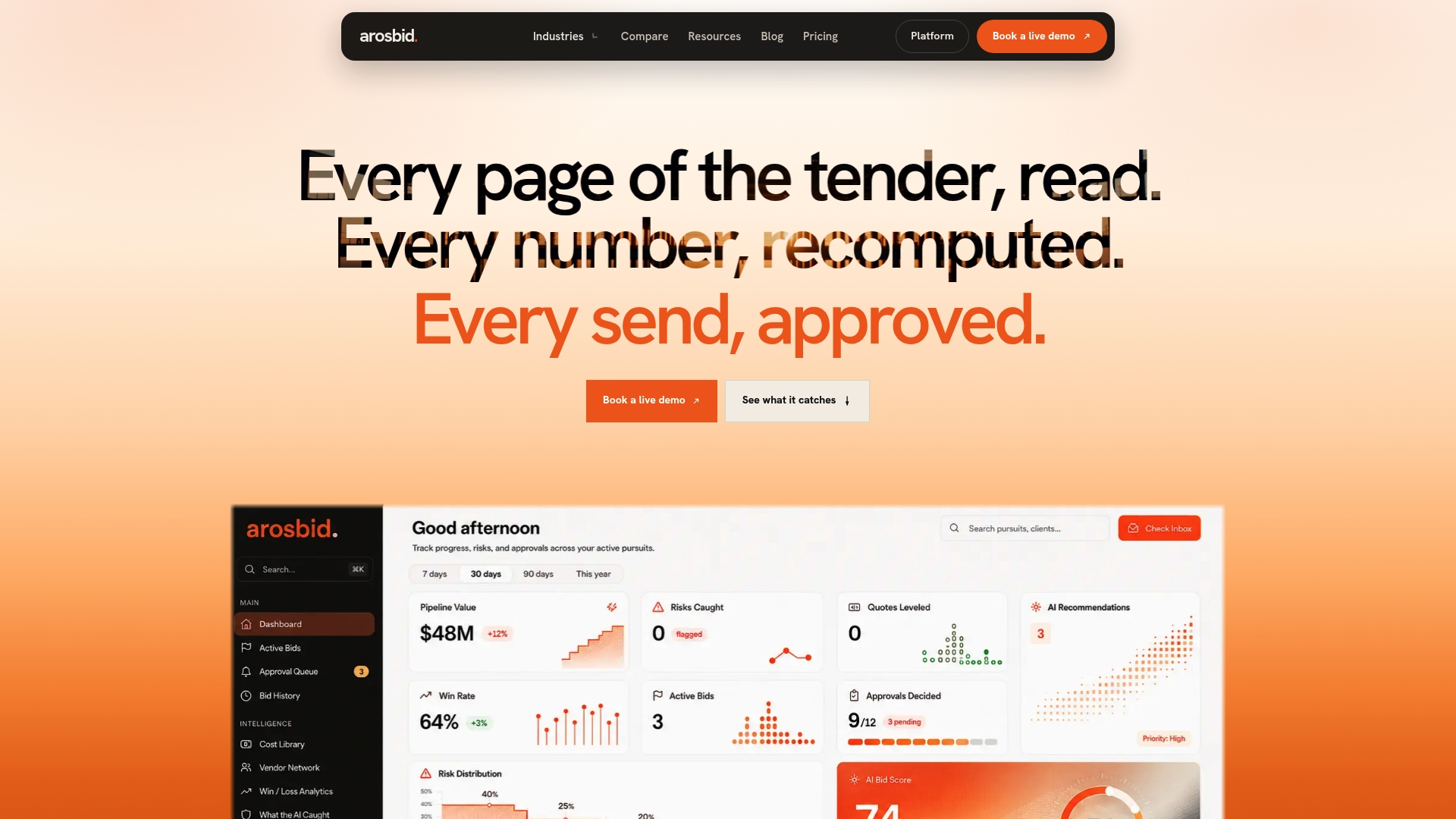
For quote leveling specifically, ArosBid’s leveling tools normalize vendor pricing formats automatically, cutting down the manual spreadsheet work that eats up assembly time. Trade-specific teams, whether you’re bidding structural steel, mechanical scopes, or roofing work, get the same intake to submission structure without overhauling the tools you already use, since ArosBid connects with Excel and Outlook out of the box. If your intake process still depends on someone remembering to check a shared inbox, book a demo and see what a structured triage step looks like on your next live bid.
Sources
- Construction Bid Management: 7-Step Workflow That 2026 | US Tech Automations
- Request for Bid business process — Oracle Primavera Unifier documentation
- Bid management best practices to follow in 2025 — SiftHub
FAQ
What Is a Construction Bid Management Workflow?
It’s a repeatable, staged process, typically seven steps from RFP capture through post-bid follow-up, that governs how a team decides which projects to pursue, prices them, and gets them approved and submitted on time.
How Long Should Bid/No-Bid Triage Take?
Triage should happen within 24 to 48 hours of receiving an RFP, before assigning estimator time, to avoid reactive firefighting on projects that don’t fit your criteria.
What Should Be in a Bid Content Library?
A reusable content library should hold past proposal language, boilerplate qualifications, standard scope clarifications, and pricing templates so estimators aren’t rebuilding the same sections for every bid.
When Does Bid Process Automation Pay Off?
Automation pays off once a team handles enough concurrent bids that manual tracking causes missed deadlines or duplicated work, and platforms like ArosBid typically show measurable time savings within 60 to 90 days for teams with steady volume.
How Soon Should a Win/Loss Review Happen?
Schedule the review soon after the award decision, for both wins and losses, so the reasons behind the outcome are still fresh enough to be useful.